
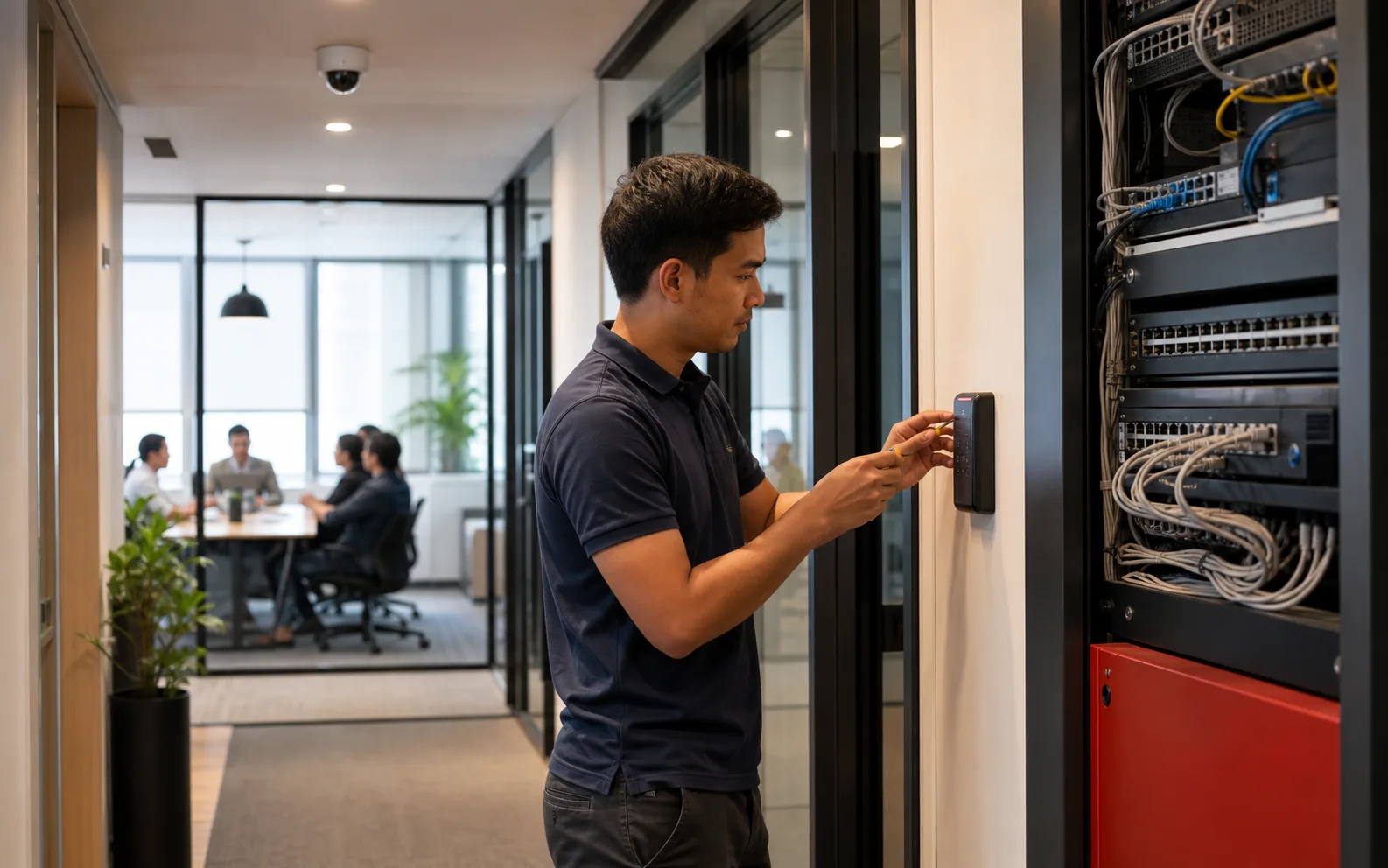
Office Setup
Smart Office & Security
An implementation concept bringing together networking, Wi-Fi, CCTV, access control, meeting rooms, server racks, and workplace devices.
View project detailsIT Infrastructure
A concept for standardized, secure, stable, and centrally observable network infrastructure supporting operations across multiple locations.

Project context
Inter-branch connectivity is inconsistent and the source of disruptions is difficult to identify.
Network configurations are not standardized across locations.
User and device segmentation does not yet match operational needs.
Network topology, configuration, and change documentation are not centralized.
Implementation direction
Establish a network standard that can be applied consistently across locations.
Improve network access control through segmentation and secure connectivity.
Provide centralized visibility for condition monitoring and incident response.
Prepare documentation that supports ongoing management and future branch rollout.
Solution concept
Topology, device standards, addressing, and cable routes are designed as a shared reference for the head office and branches.
VLANs, firewall policies, and site-to-site connections separate the needs of users, devices, and operational services.
Monitoring, alerts, documentation, and knowledge transfer give the team clearer context for detecting and responding to network conditions.
Scope of work
Implementation process
Map network conditions, location needs, operational dependencies, and risk points.
Define topology, segmentation, connectivity policies, and documentation standards.
Prepare equipment, cabling materials, baseline configurations, and migration plans.
Install, configure, migrate in stages, and integrate monitoring across locations.
Validate connectivity, segmentation, relevant failover, alerting, and operational readiness.
Deliver documentation, transfer knowledge, and establish the support workflow.
Technology & integrations
Potential impact
These potential impacts are not verified project outcomes.
Infrastructure across locations can be managed with more consistent standards.
Central monitoring and alerting can make network issues easier to identify.
New locations can follow a prepared architecture and documentation pattern.
Related portfolio
Office Setup
An implementation concept bringing together networking, Wi-Fi, CCTV, access control, meeting rooms, server racks, and workplace devices.
View project details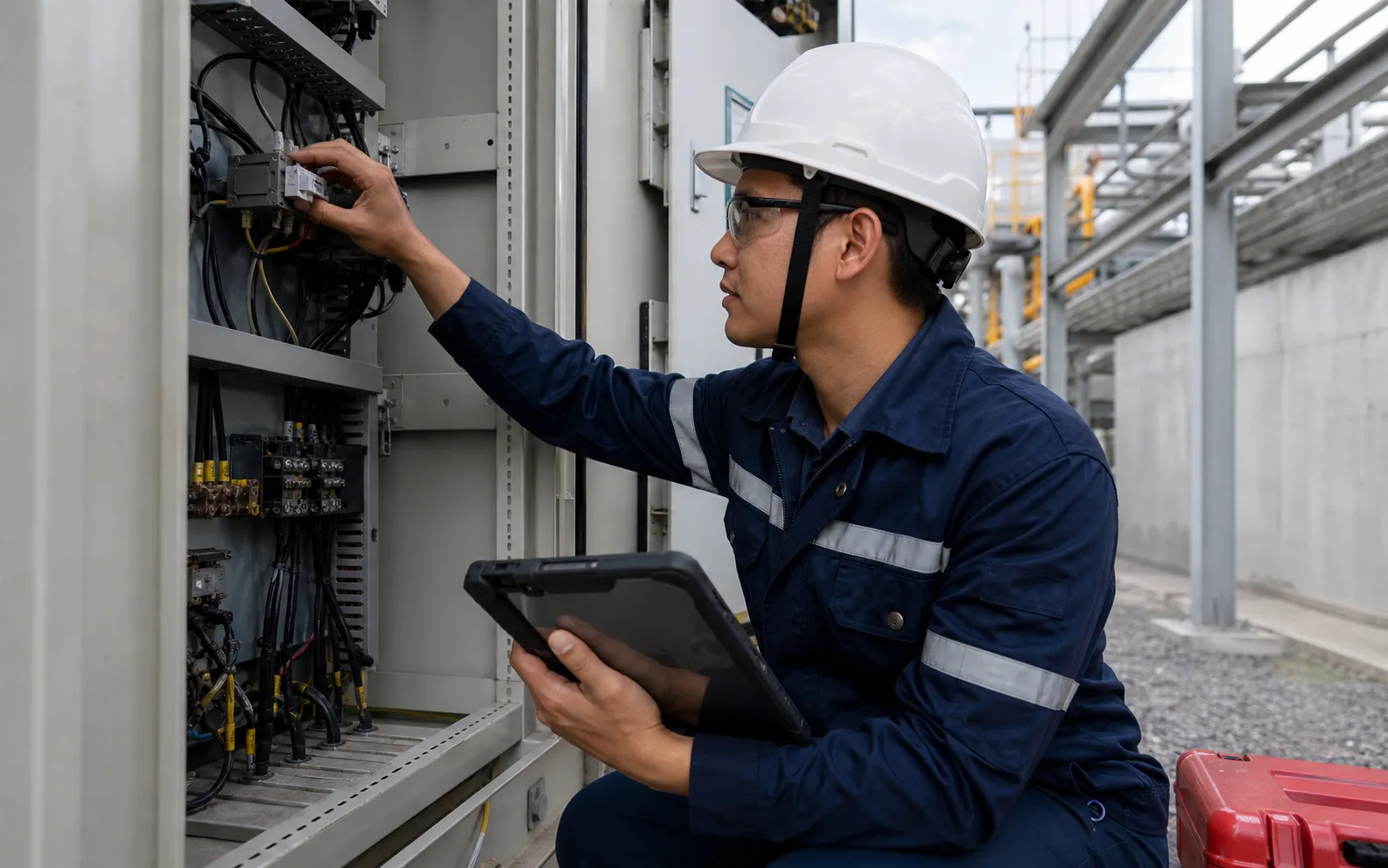
Web Application
A web and mobile platform concept for work orders, technicians, schedules, field documentation, approvals, and SLA monitoring.
View project detailsStart with your needs
Tell us about your process, challenges, and operational needs. The Intertekno team will help shape an appropriate solution.